
This week I visited the RR Donnelley printing facility in Willard, OH. My goals for the trip were relatively modest: take a couple of photos of our book, Green Building: Principles and Practices in Residential Construction, rolling off the presses and to learn a bit about the printing process. The trip was a great success, thanks to the great team at RR Donnelley, especially my tour guide for the day Mike McLendon, and my companion from Delmar/Cengage Learning.
A typical cold and wet Ohio morning.
The drive from Columbus to Willard is about 85 miles of mostly farm fields. In typical Ohio fashion the weather was cold and wet. Despite the outside being thoroughly uninviting, I have to admit I have a soft spot for this weather. Something about it just feels very calm and peaceful. While Willard looks like a typical small town in the middle of crop fields, they have a surprisingly robust industrial base that includes CSX Transportation rail yard, Midwest Industries, RR Donnelley, Pepperidge Farm, and Mercy Willard Hospital. Impressive for a town of only 5,000 people!
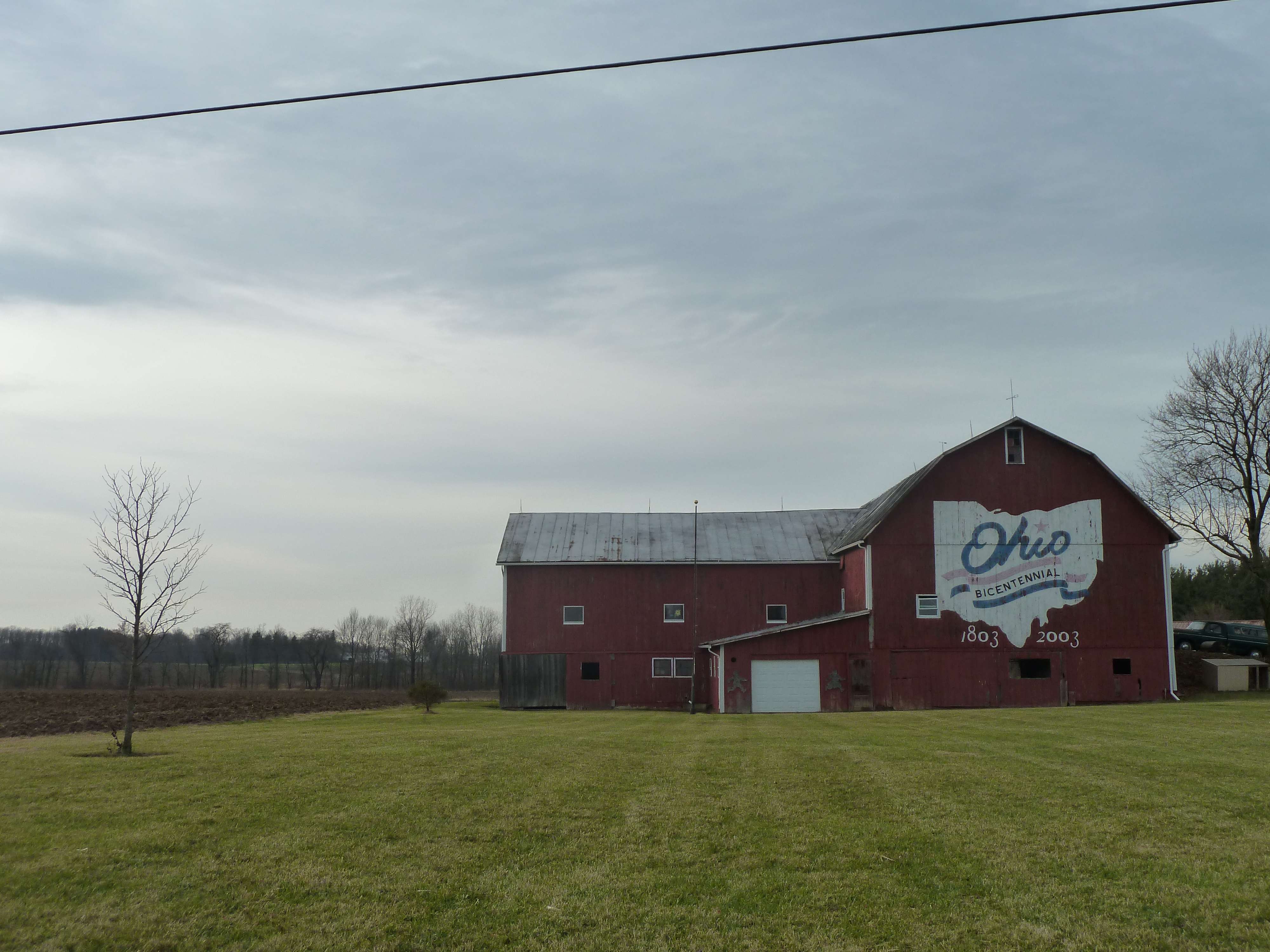
After my plant visit the sun decided to finally come up.
I knew that RR Donnelley was large, but I did not know that with nearly 40 facilities around the world they are in fact the largest printer worldwide. The Willard plant opened nearly 55 years ago and has grown to include 34 acres under roof. Today they employ approximately 1,000 people, but that’s down from a high of nearly 1,800. The combination of automation and digitization of printing has been wonderful for product efficiency, though not necessarily the workers. This issue is playing around across the country and in multiple industries.
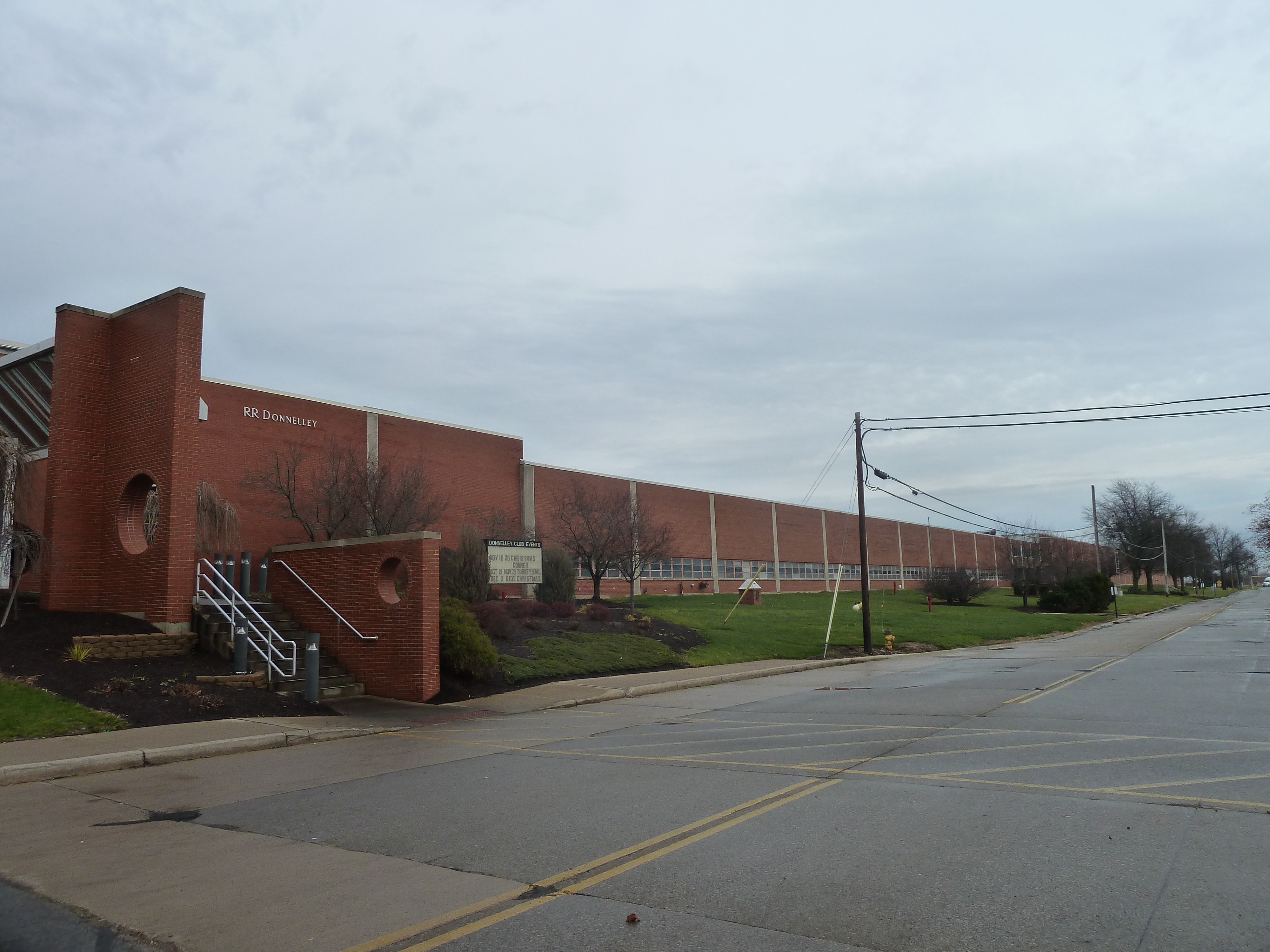
The RR Donnelley Willard plant includes 34 acres under one roof. There is more of the plant off to the left that's not visible in the photo.
Everyone I met at the plant was very proud of their work and excited to talk about the printing process. Part of it might be that authors don’t usually visit, let alone one who asks as many questions as me!
I watched the entire printing process, from digital file review (where digital copies of the manuscript are prepped for printing) to printing, and finally, the binding of books. I was also able to visit their massive recycling facilities. This facility is one of largest scrap metal recyclers in North America due to the quantity of aluminum printing plates they use.
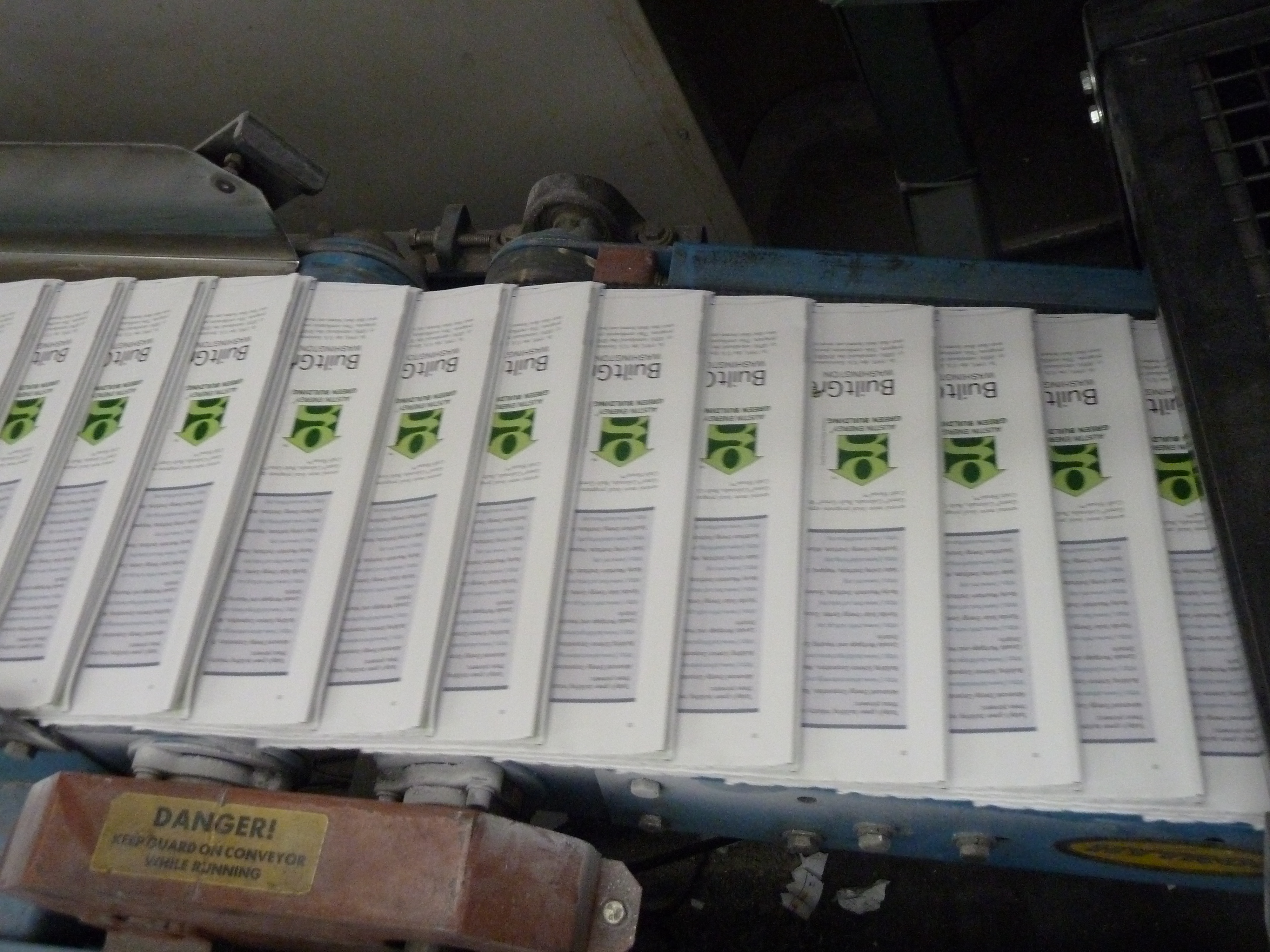
First batch of pages rolling off the presses.

The first pages of Green Building...hot off the presses!
Throughout the day the theme could have been modernization and the shift to digitization. When the plant opened, large sheets of film were used to produce the printing plates. Text and artwork were created with hand cut pieces of film. From the film, plates were created for printing. Today plates are produced from digital files and soon their presses will be swapped out for digital printing (basically a giant household printer). Currently RR Donnelley has a number of digital presses at other plants, but they are primarily used for short runs (limited number of prints) and quick turn around times.
Printing is still a very hands-on business. Workers remove blank pages from groups of 32 printed pages, called signatures, that are assembled into finished books. They open cases of textbooks to inspect them for quality, and I heard stories of people removing tiny drops of ink from the spines of books. Throughout the plant there are numerous visual inspections to make sure colors are correct or the pages are properly set on the sheet of paper.
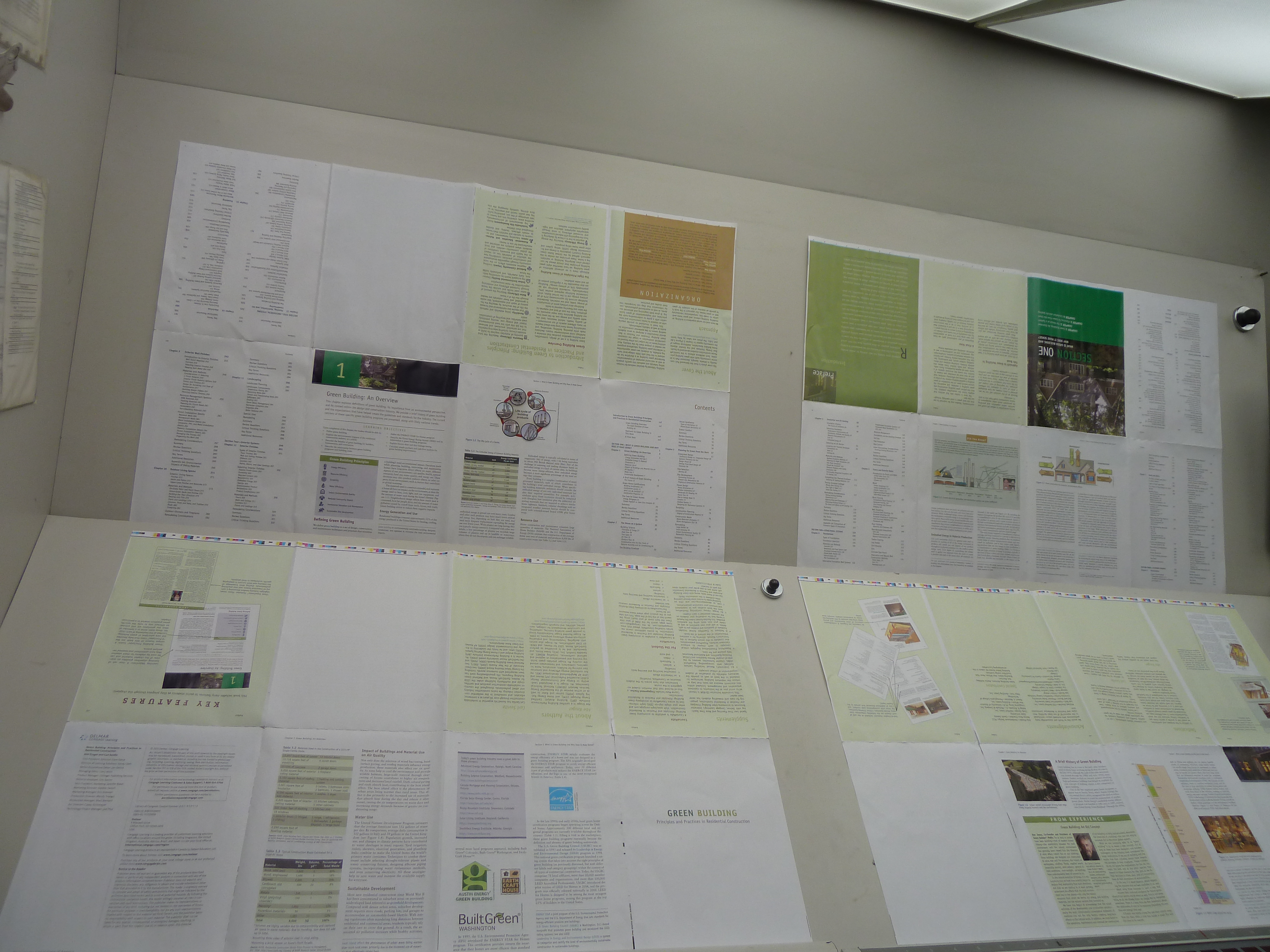
First batch of pages laid out for quality assurance inspection. The printing technician is looking to ensure colors are consistent, the pages are properly arranged on the paper, and there are no other quality issues.
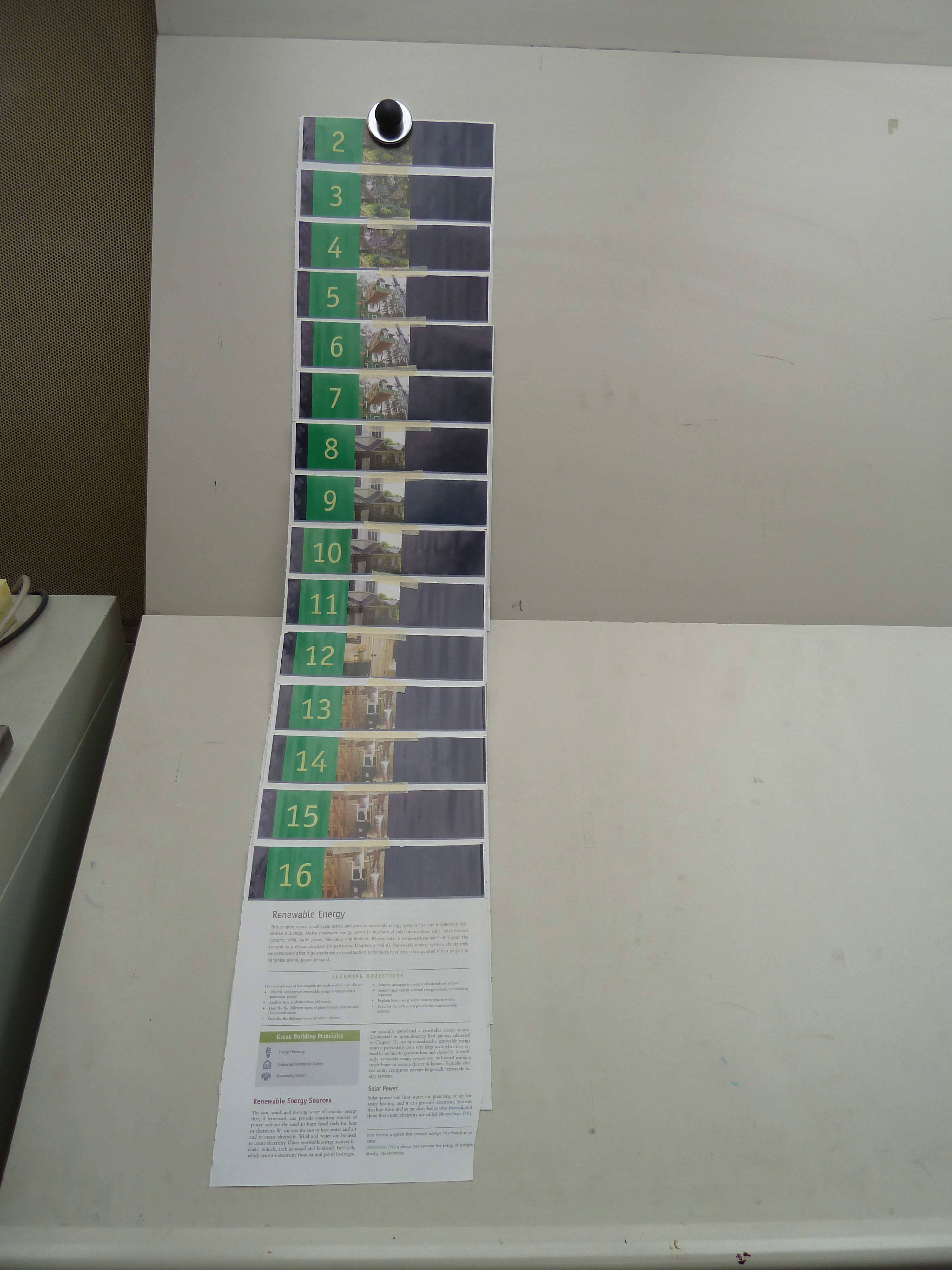
The first page of each chapter is compared to ensure consistent colors.
One byproduct of high quality standards is the amount of waste paper created. They expect almost half of all printed pages, and hundreds of copies of completed books, will go into their recycling stream.

Three years of hard work...straight into the dumper (to be recycled, of course)!
I could go on and on talking about all the exciting things I learned about printing, but you’re probably falling asleep already. Sometimes it’s lonely being such a geek!
The pages are printed, the books themselves will be bound next week, and the finished books will be shipped before the end of the year. The book is available directly from the publisher, Amazon.com and other retailers.

 No Faux Green
Congratulations Abe!! I didn’t know you were writing a book. I look forward to getting a copy of it and possibly using it in my Green Building classes.
John Ring
Thanks, John! I do think the book would be perfect for your class! We had instructors from around the country review the text with overwhelmingly positive feedback. There was definitely a large void for a residential green building textbook. You can read the first two chapters on the publisher’s website and we have some additional pages up on Facebook.
Publisher’s website: http://www.cengage.com/search/productOverview.do?N=%204294922452&Ntk=P_Isbn13&Ntt=9781111135959